Category

Borrower Advisory

84 insights · page 4 of 11

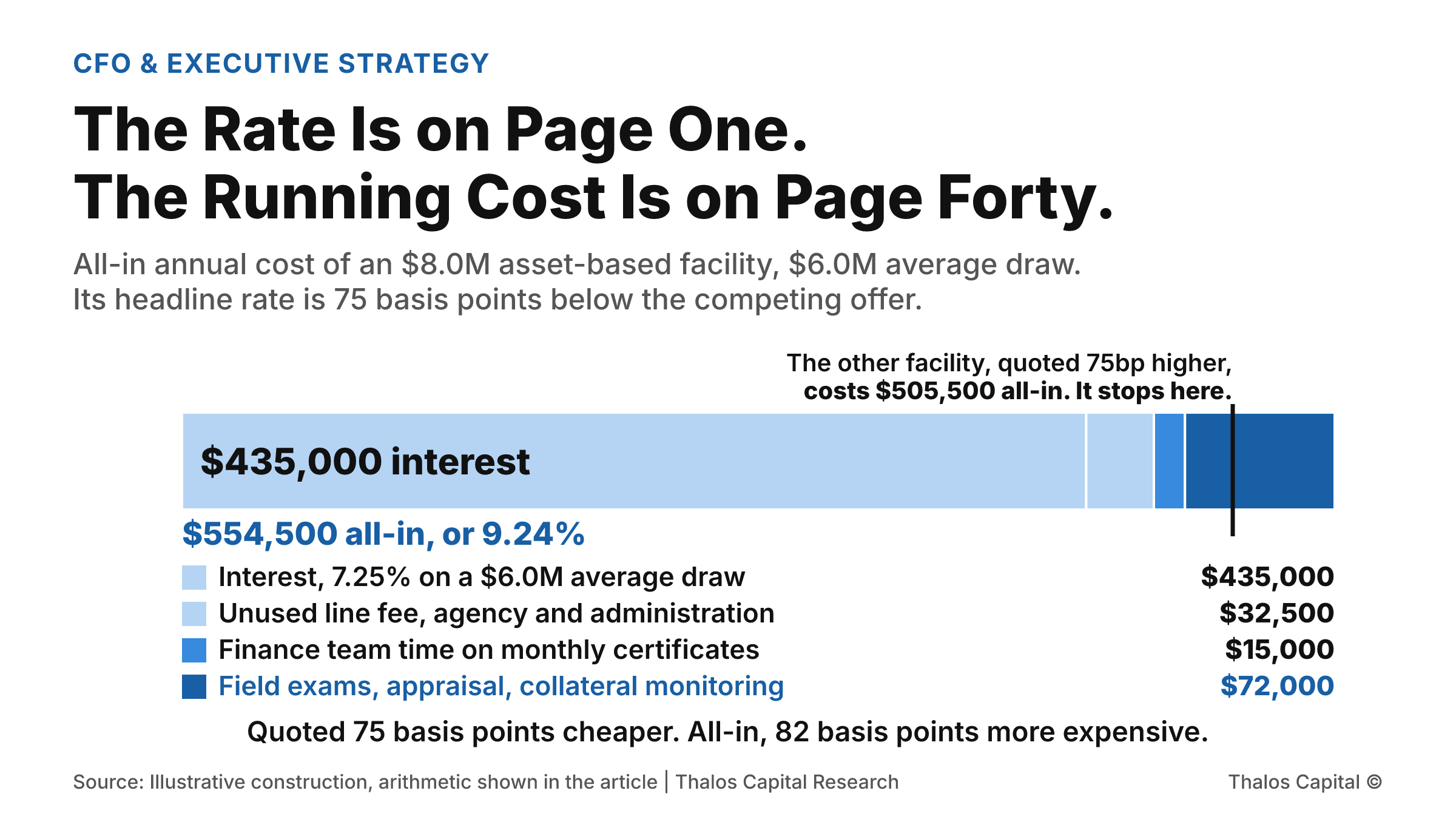
A single stacked bar of the all-in annual cost of an $8.0 million asset-based facility at a $6.0 million average draw, totalling $554,500, with a marker showing that a competing facility quoted 75 basis points higher costs $505,500 all-in.

The Rate Is on Page One. The Running Cost Is on Page Forty.

Two facilities quoted 75 basis points apart. Once field exams, appraisals, collateral monitoring and the finance team's own hours are counted, the cheaper-looking one costs 82 basis points more to run. The gap reverses entirely.
Read More
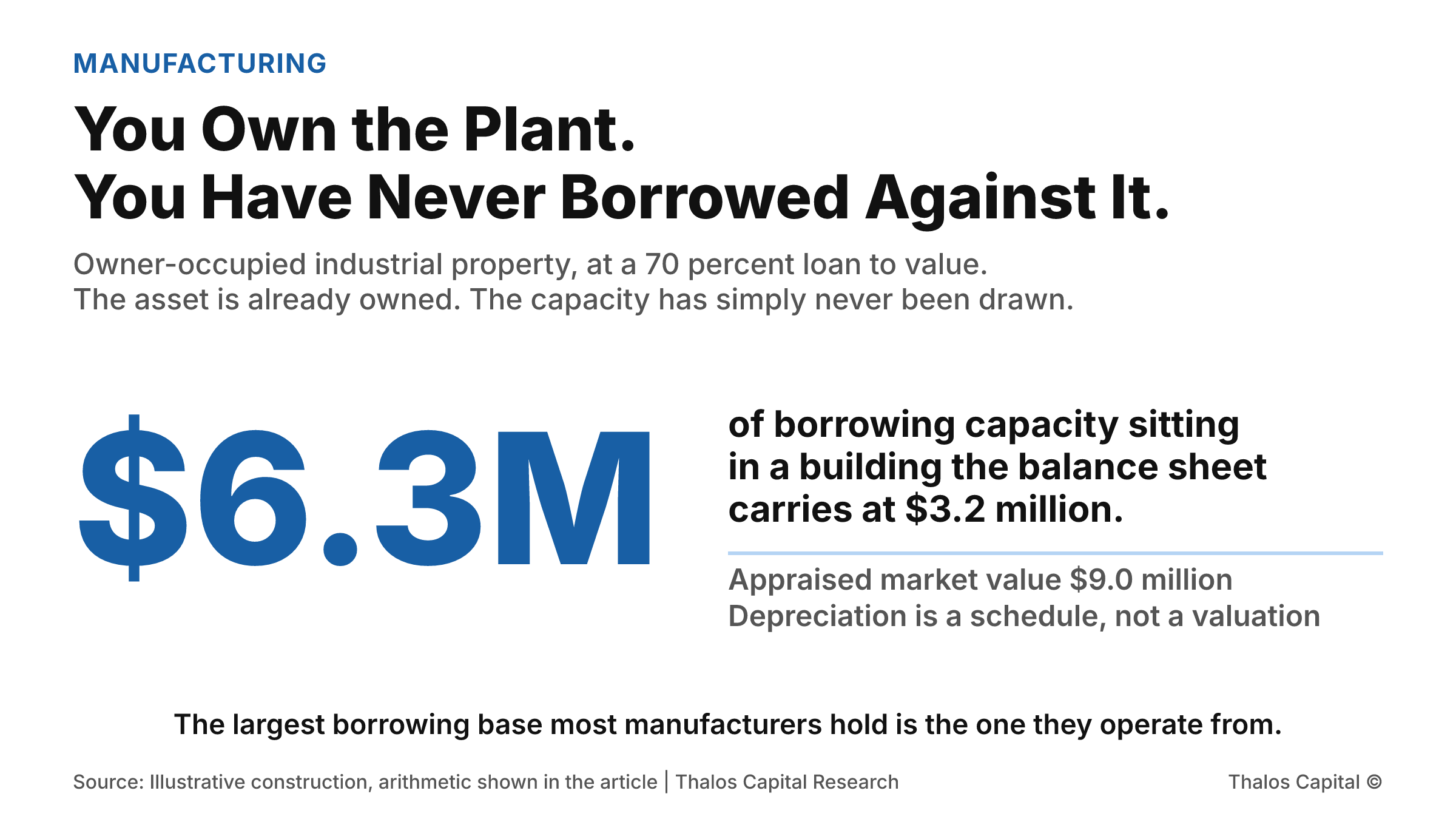
A single large figure of $6.3 million of borrowing capacity available against an owner-occupied manufacturing plant at a 70 percent loan to value, set against the $3.2 million depreciated book value the balance sheet carries and a $9.0 million market value.

You Own the Plant. You Have Never Borrowed Against It.

A manufacturer finances equipment and receivables while its largest asset sits untouched, carried at a depreciated book value that hides what it is worth. Two routes convert it to cash, and only one of them is a loan.
Read More
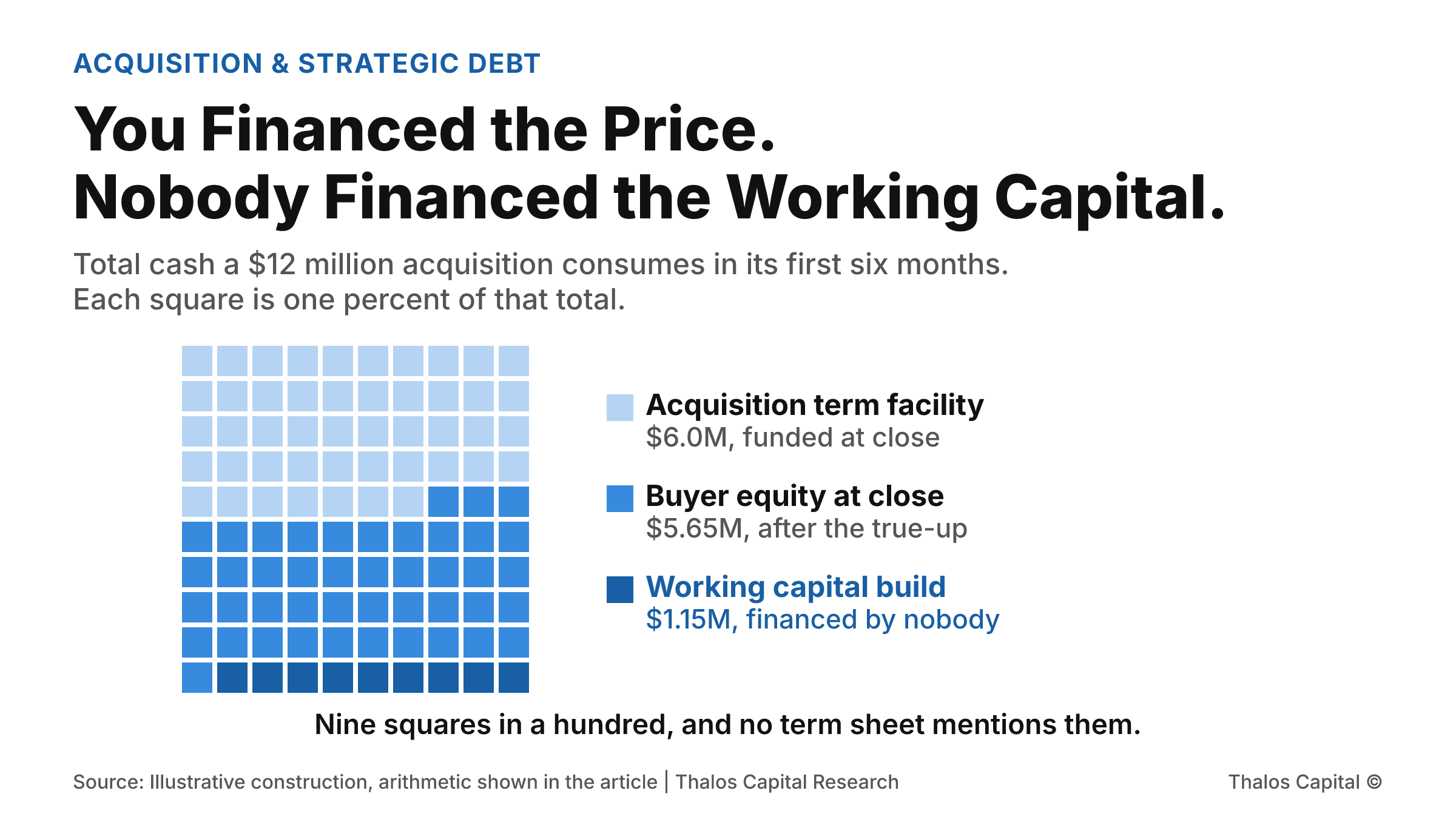
A hundred-square waffle showing the total cash a $12 million acquisition consumes in its first six months: 47 squares funded by the acquisition term facility, 44 by buyer equity at close, and 9 by a working capital build that sits outside the deal model.

You Financed the Price. Nobody Financed the Working Capital.

A buyer models an acquisition as price minus debt equals equity. Then the working capital true-up lands, and the seasonal build after it. The cash required is the same whichever month the deal closes, and the acquisition facility funds none of it.
Read More
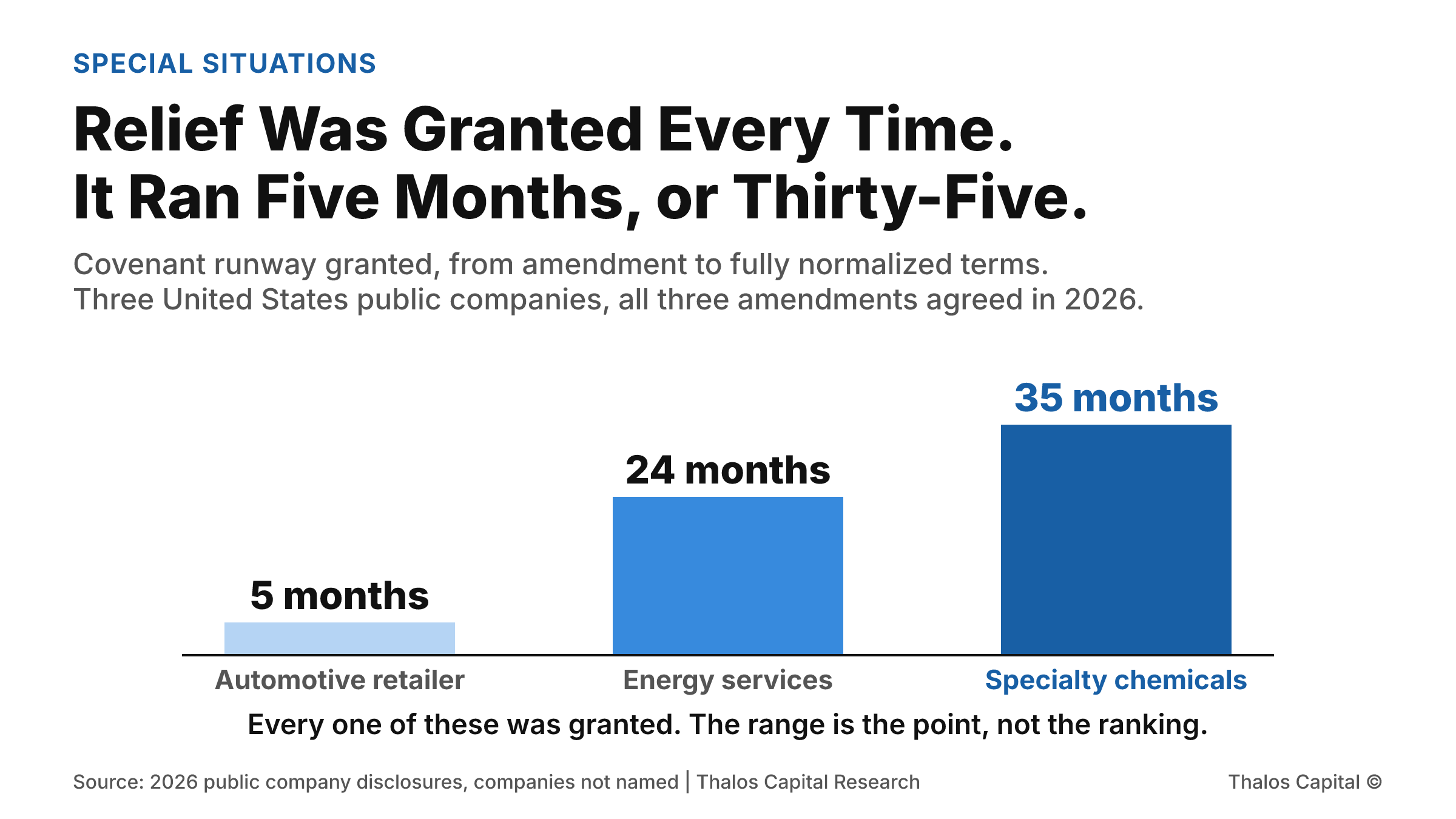
Three columns comparing covenant runway granted in 2026 amendments by three United States public companies: about five months for an automotive retailer, twenty-four months for an energy services company, and thirty-five months for a specialty chemicals company.

Relief Was Granted Every Time. It Ran Five Months, or Thirty-Five.

Three United States public companies disclosed covenant amendments in 2026. Every creditor group said yes. One got a conditional bridge of a few months, another two years, a third nearly three. The breach severity is not what separated them.
Read More
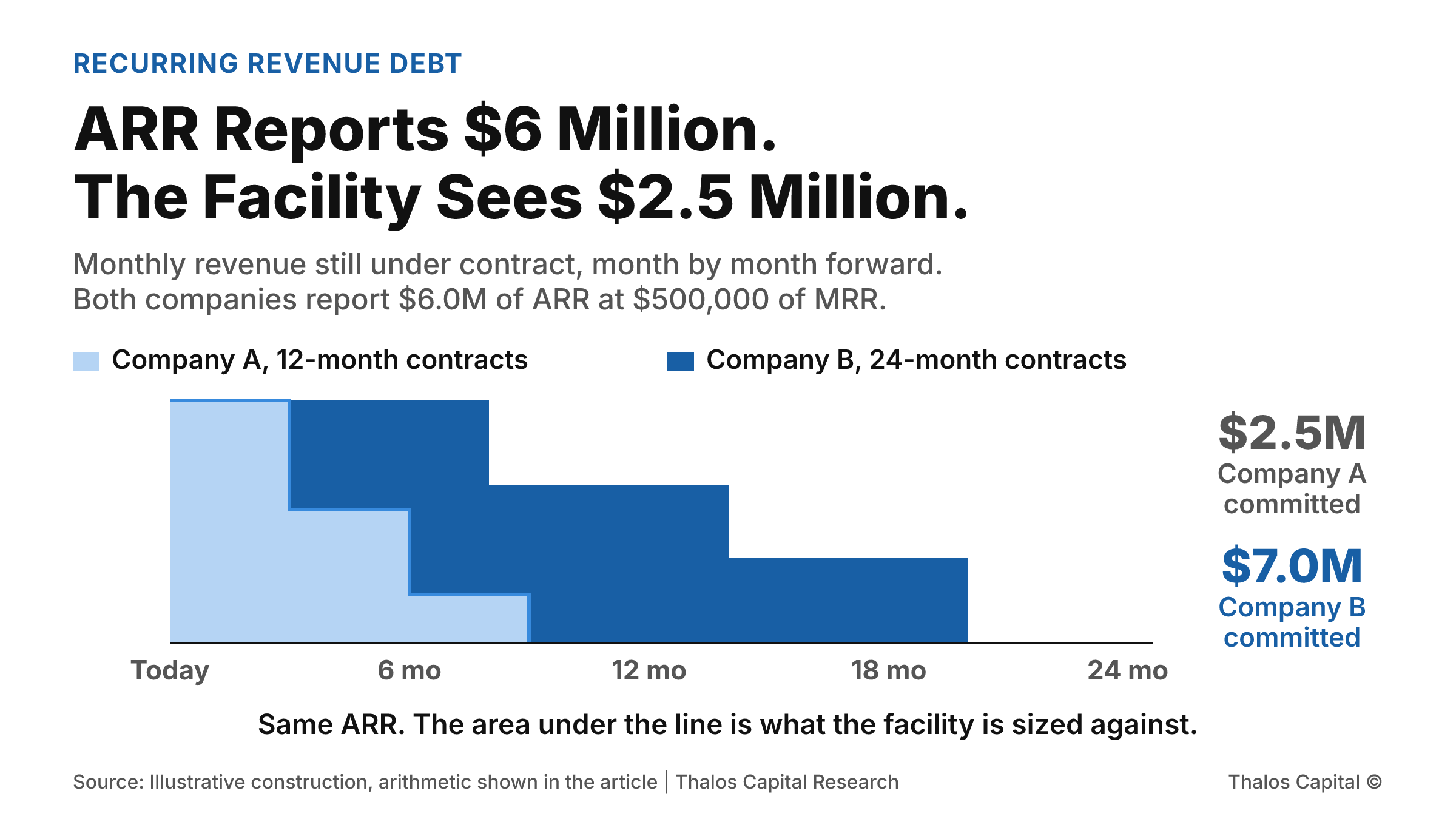
Two stepped areas showing monthly revenue still under contract over the next 24 months for two companies with identical $6.0 million ARR: a 12-month contract book holding $2.5 million of remaining contracted value and a 24-month contract book holding $7.0 million.

ARR Reports $6 Million. The Facility Sees $2.5 Million.

Two recurring-revenue companies each report $6.0 million of ARR. One is offered a $2.0 million facility and the other $1.0 million. The difference is contract length, and it does not appear in any metric either company reports.
Read More
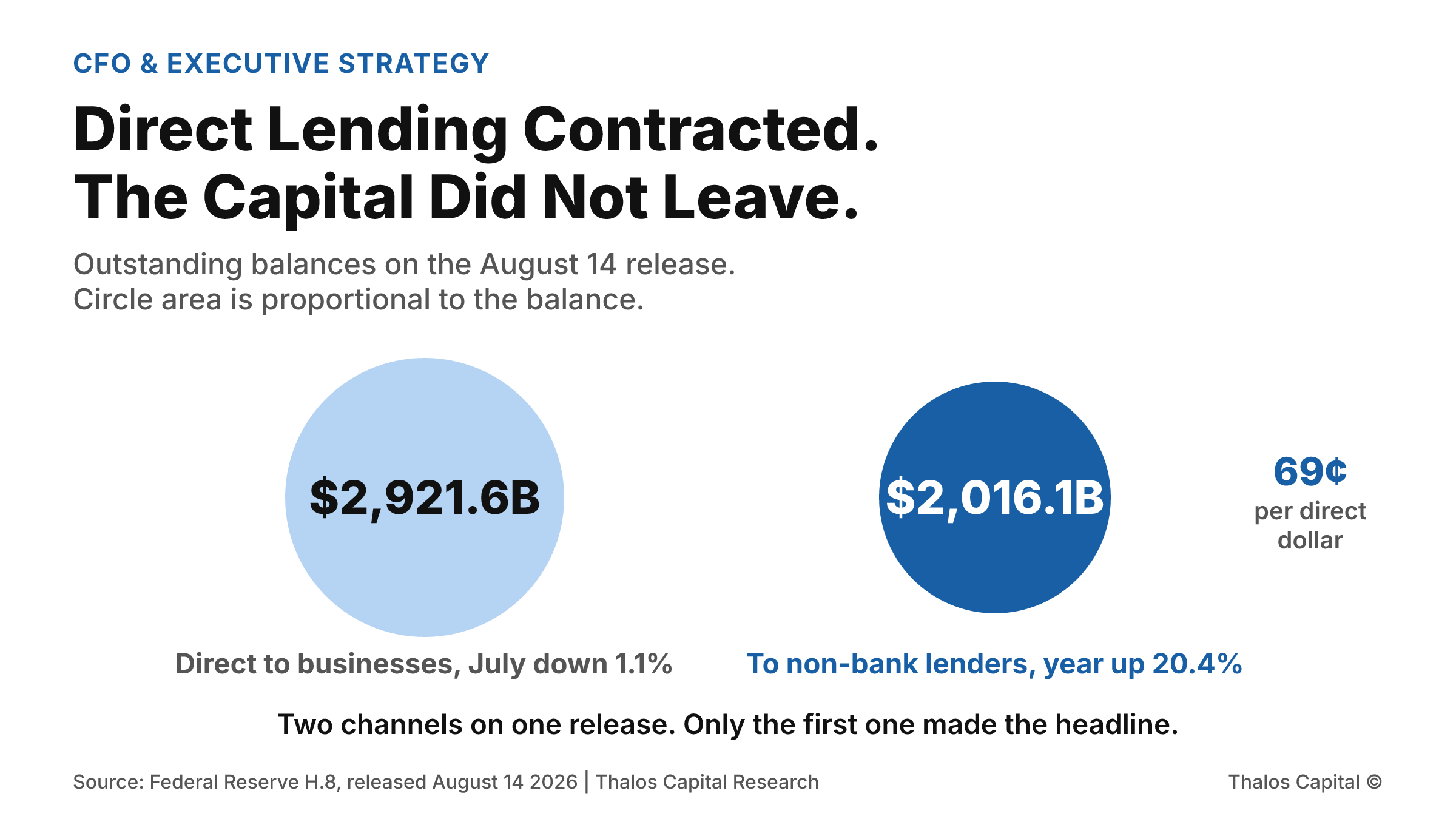
Two proportional circles comparing commercial and industrial loan balances of $2,921.6 billion, which contracted 1.1 percent annualized in July, against lending to non-depository financial institutions of $2,016.1 billion, up 20.4 percent on the year.

Direct Lending Contracted. The Capital Did Not Leave.

July brought the first contraction in commercial and industrial balances all year, at minus 1.1 percent annualized. Over the same stretch, lending to non-bank financial institutions reached $2,016.1 billion, up 20.4 percent.
Read More
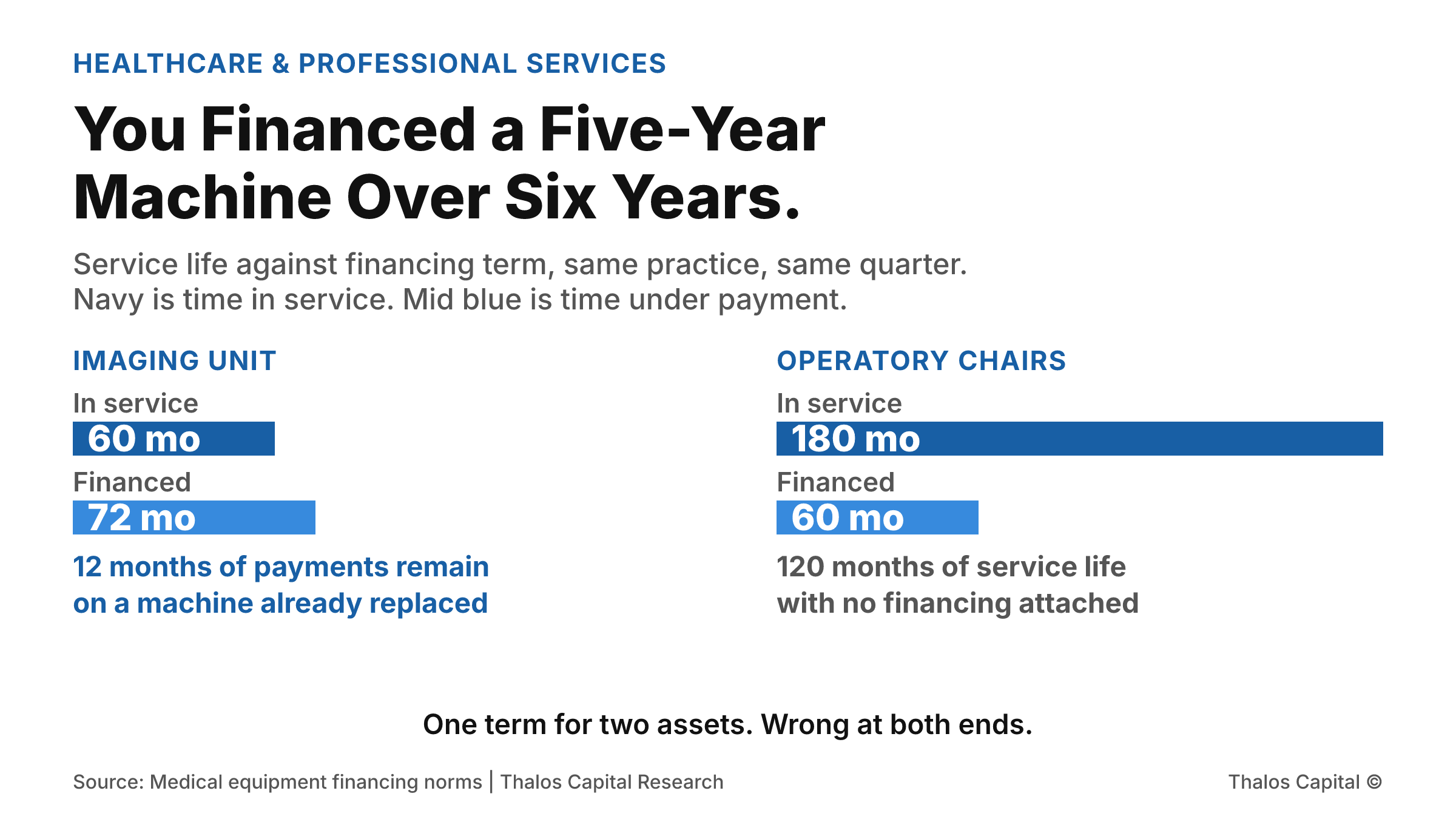
Two panels comparing asset service life against financing term. An imaging unit serves about 60 months but is financed over 72, leaving 12 months of payments on a retired machine. Operatory chairs serve about 180 months but are financed over 60, leaving 120 months of unfinanced life.

You Financed a Five-Year Machine Over Six Years.

A practice buys imaging and operatory chairs in the same quarter. One faces obsolescence in five years, the other runs fifteen. Financing both on a single term loses money at both ends.
Read More
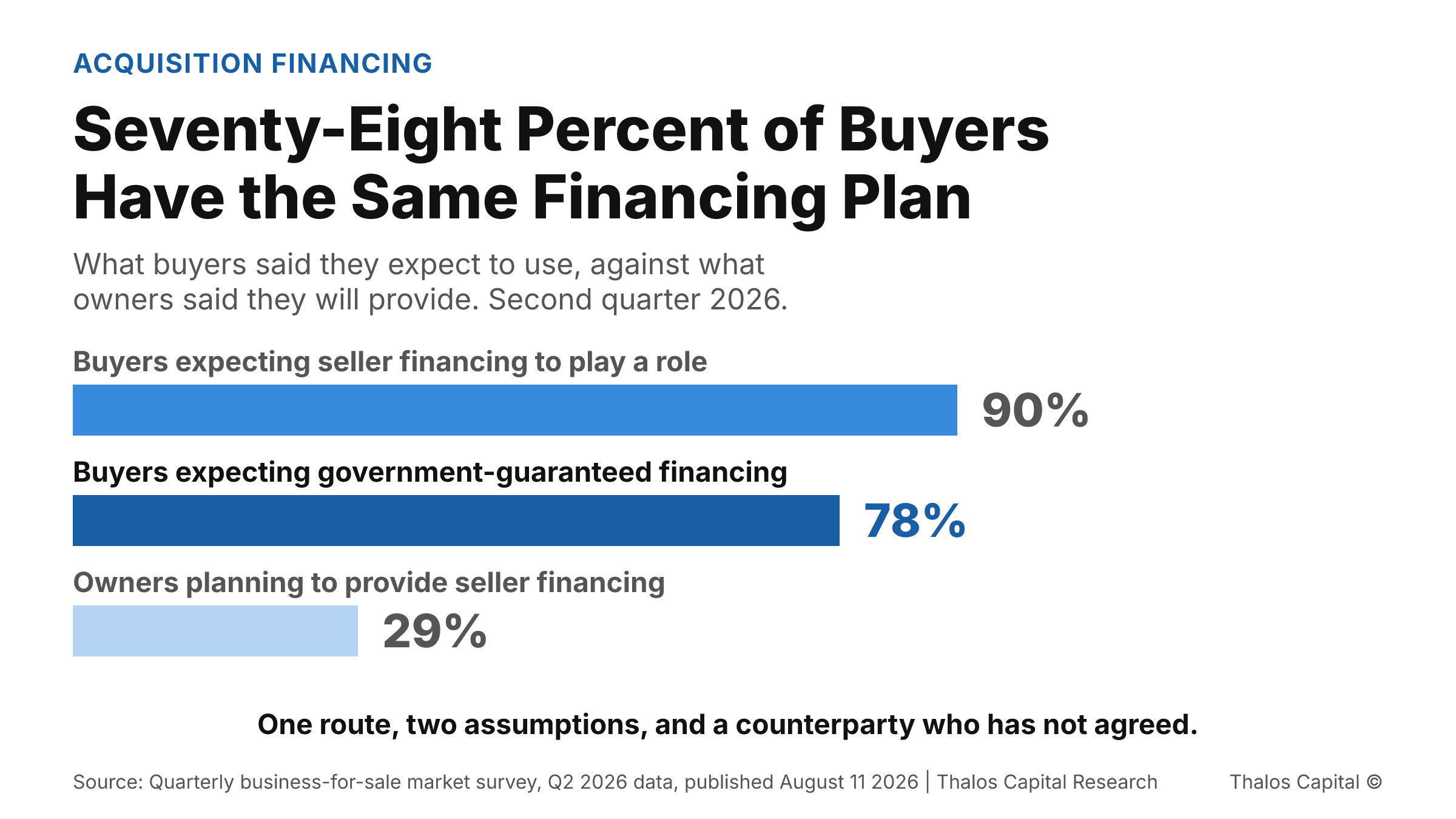
Horizontal bar chart of three survey figures from the second quarter of 2026. Ninety percent of buyers expect seller financing to play a role, seventy-eight percent expect financing backed by the U.S. Small Business Administration, shown in the darkest navy as the value argued, and twenty-nine percent of owners plan to provide seller financing.

Seventy-Eight Percent of Buyers Have the Same Financing Plan

Nearly eight in ten buyers expect to fund an acquisition through one government-guaranteed program, and ninety percent expect a seller note that only twenty-nine percent of owners plan to write.
Read More
Working through a financing decision?
Insights are a starting point. A conversation maps your actual options.
Tell us what you are financing and we will map the structures and sources that fit.
Submit your financing request →
Explore our financing solutions
Equipment FinancingWorking CapitalAsset-Based LendingStrategic Debt